About Automobile Rubber Vulcanizing Autoclave
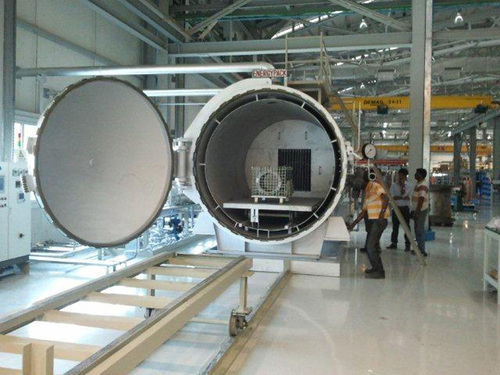
We are a reckoned name of the industry, engaged in presenting optimum quality Automobile Rubber Vulcanizing Autoclave that is also known as heaters, kettles or reactors. The offered autoclave is manufactured by making use of the finest quality components under the supervision of our dexterous professionals. Available in different technical specifications, the provided autoclave is widely used for the curing of rubber and plastic products. Apart from this, we offer this Automobile Rubber Vulcanizing Autoclave to the clients within promised time-frame.
Features:
State-of-the-Art Vulcanization ProcessOur autoclave provides advanced control over temperature and pressure, up to 200C and 2.5 MPa respectively, ensuring precise vulcanization for automotive rubber products. Automation options range from semi-automatic to fully automatic, allowing flexibility and consistency in processing, and guaranteeing high-quality, durable output.
Versatile Applications & Custom DesignsThis autoclave is tailored for diverse automotive applications like tyre retreading, rubber hoses production, insulation parts, and rubber rollers. It is available in various customized dimensions and insulation thicknesses, accommodating specific workflow or plant requirements. Loading systems can be manual or trolley-based for ease of use.
Robust Safety & Superior EfficiencyIntegrated safety features such as over-temperature alarms and emergency stops ensure secure operation. The autoclave achieves up to 80% thermal efficiency and is compatible with electric, steam, or oil-fired fuels, making it an energy-efficient solution designed for longevity and indoor operation.
FAQs of Automobile Rubber Vulcanizing Autoclave:
Q: How does the vulcanizing autoclave ensure consistent quality in rubber products?
A: The autoclave uses a PLC-based digital control panel to precisely regulate temperature and pressure, promoting uniform vulcanization. This digital automation helps maintain product consistency and repeatable results across batches.
Q: What heating sources are compatible with this autoclave model?
A: The system supports multiple heating sources such as electric heaters, steam generators, and thermic fluid heaters, allowing you to choose the most suitable and cost-effective option for your operation.
Q: When should I use a manual versus a hydraulic or pneumatic door system?
A: Manual doors are suitable for smaller autoclave sizes or limited usage, while hydraulic or pneumatic doors are ideal for frequent operation, larger units, or where enhanced safety and ease of access are desired.
Q: Where can this autoclave be installed for optimal performance?
A: It is designed for indoor use or within a covered shed to protect it from weather elements, ensuring reliable performance and prolonged equipment lifespan.
Q: What is the typical process for loading and unloading rubber items in the autoclave?
A: Loading can be performed manually or by using a trolley system, depending on the autoclave configuration and product size. The process is designed to be ergonomic and safe, accommodating diverse rubber components.
Q: How does the autoclave contribute to workplace safety during operation?
A: Safety is enhanced through automatic pressure release valves, emergency stop functions, and over-temperature alarms. These measures protect both operators and equipment during the vulcanization cycle.
Q: What are the main benefits of using this autoclave for automotive rubber processing?
A: Key advantages include high heat efficiency, customizable size and capacity, rigorous safety features, and consistent product qualityall supported by durable stainless or carbon steel construction for long service life.




 Send Inquiry


 Send Inquiry